AI-first search is changing how brands need to think about marketing budgets. Here’s how to rethink your investment across SEO, GEO, content, paid media and Digital PR.
How To Build A Marketing Budget For An AI-First Search Landscape
read more
Most conversations about ChatGPT Ads are still speculative at this stage. But we’ve been running live campaigns through OpenAI’s Ads Manager, and the CPA (cost per acquisition) is coming in stronger than the paid channels we’d typically defend as our best performers.
That’s a meaningful signal, and it has significant implications for how marketing leaders should be thinking about their test budgets. If you want to get ahead with ChatGPT ads, the window where this channel is cheap, uncrowded, and forgiving of experimentation is open now (but it won’t stay that way).
Below is what our Director of Data and Performance, Chris Hirelemann, has learned from the setup, targeting, and early performance of ChatGPT Ads, and where we think experienced marketers are still getting the strategic call wrong.
Need a reminder of the basics? Read our Marketer’s Guide to ChatGPT Ads in the UK.
Early CPA performance on ChatGPT Ads is outperforming established paid channels, which makes the “wait and see” position increasingly hard to defend for brands with intent-driven demand.
The default position from most marketing teams right now is to wait until the platform matures, volumes scale, and case studies pile up. That’s a reasonable instinct, but it might be causing you to miss out on an emerging opportunity. Chris’s read from live campaigns is clear:
“Quite early days, and it’s quite small volume compared to what we’re doing more generally, but good. I mean, the cost per acquisition is really strong, actually stronger than we’ve seen elsewhere.”
Volume may well be limited, but efficiency is high. And, generally speaking, that’s the classic shape of an emerging channel before auction density catches up with advertiser demand. Meta had this window. Google Shopping had it. TikTok had it (briefly). The advertisers who moved during those windows built compounding data advantages that later entrants never fully closed.
When it comes to the commercial implication, if you have a performance budget with any test allocation at all, a small ChatGPT Ads pilot is a more rational bet right now than incremental spend on saturated channels.
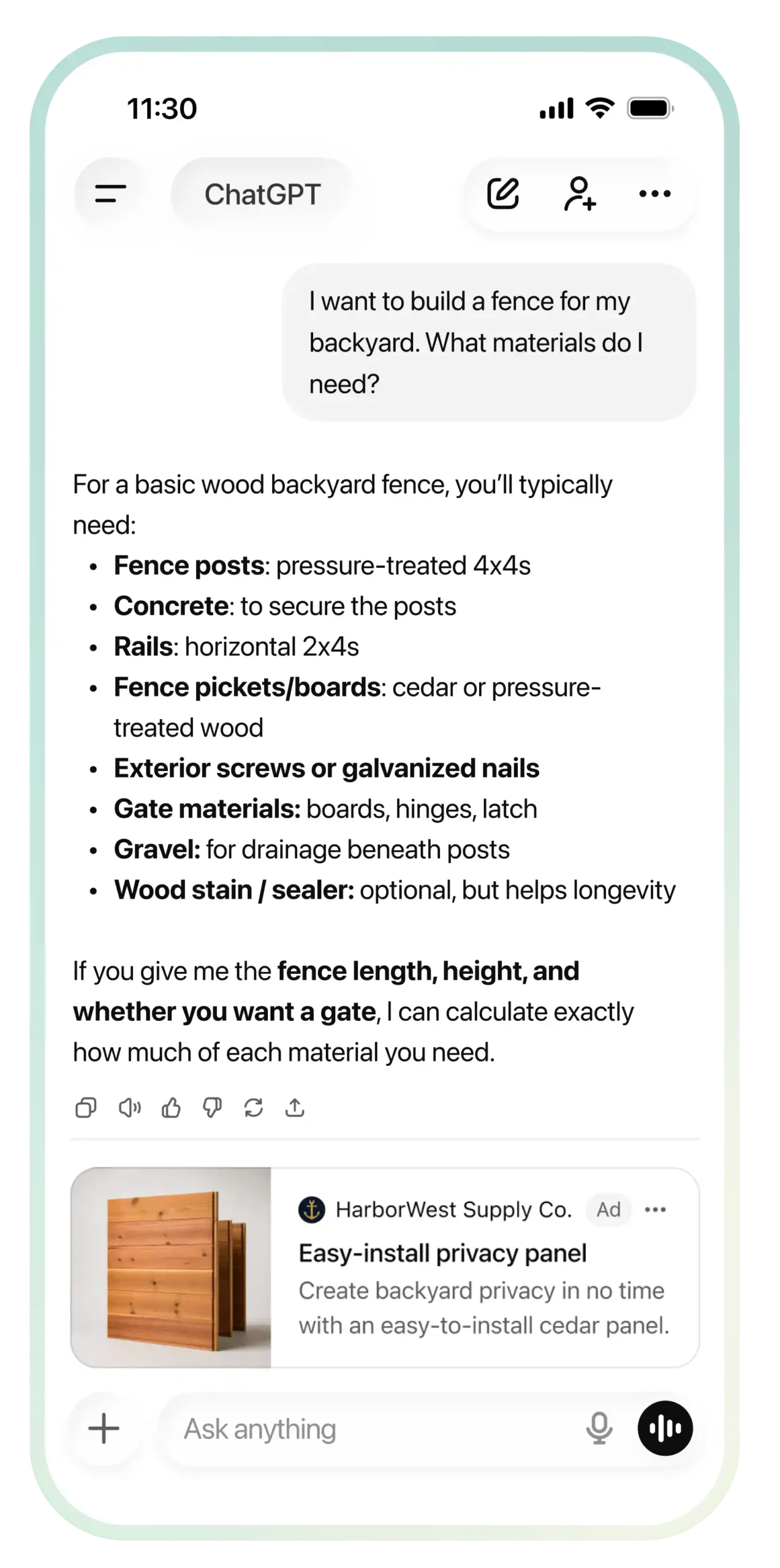
ChatGPT Ads targets things based on the topics and context of a user’s conversation, which sits closer to keyword intent than to social audience targeting, and rewards advertisers who already think in search terms. Chris describes the targeting:
“You are targeting basically on topics, the kind of things that users are searching for. So, not all that dissimilar from keyword targeting. And you can create audiences as well so that you can then target based on people that have taken certain actions, and then you want to follow up.”
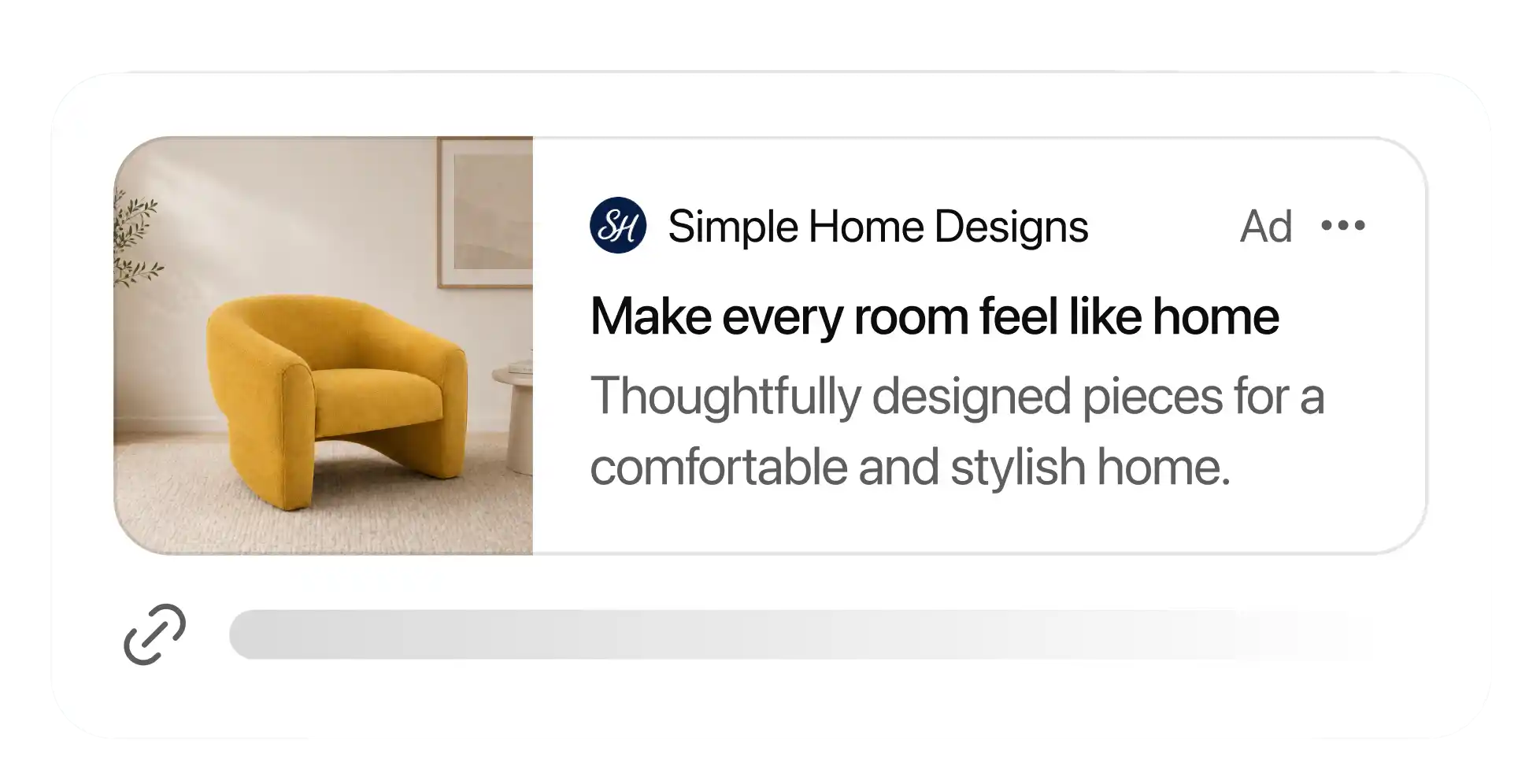
For teams with strong paid search discipline, that’s a helpful mental model. The intent signal is closer to a Google query than to a Meta interest cluster, because the user is actively asking, comparing, or deciding inside the conversation. Creative appears as a banner containing one or two ads, either using OpenAI-generated visuals or your own, alongside short text relevant to the topic being discussed.
Early CPA performance on ChatGPT Ads is outperforming established paid channels, which makes the “wait and see” position increasingly hard to defend for brands with intent-driven demand.
The default position from most marketing teams right now is to wait until the platform matures, volumes scale, and case studies pile up. That’s a reasonable instinct, but it might be causing you to miss out on an emerging opportunity. Chris’s read from live campaigns is clear:
“Quite early days, and it’s quite small volume compared to what we’re doing more generally, but good. I mean, the cost per acquisition is really strong, actually stronger than we’ve seen elsewhere.”
Volume may well be limited, but efficiency is high. And, generally speaking, that’s the classic shape of an emerging channel before auction density catches up with advertiser demand. Meta had this window. Google Shopping had it. TikTok had it (briefly). The advertisers who moved during those windows built compounding data advantages that later entrants never fully closed.
When it comes to the commercial implication, if you have a performance budget with any test allocation at all, a small ChatGPT Ads pilot is a more rational bet right now than incremental spend on saturated channels.
ChatGPT Ads targets things based on the topics and context of a user’s conversation, which sits closer to keyword intent than to social audience targeting, and rewards advertisers who already think in search terms. Chris describes the targeting:
“You are targeting basically on topics, the kind of things that users are searching for. So, not all that dissimilar from keyword targeting. And you can create audiences as well so that you can then target based on people that have taken certain actions, and then you want to follow up.”
For teams with strong paid search discipline, that’s a helpful mental model. The intent signal is closer to a Google query than to a Meta interest cluster, because the user is actively asking, comparing, or deciding inside the conversation. Creative appears as a banner containing one or two ads, either using OpenAI-generated visuals or your own, alongside short text relevant to the topic being discussed.
Conversion tracking on ChatGPT Ads is standard pixel or Tag Manager work, but server-side and enhanced conversions still require custom builds.
The tracking mechanics are familiar:
The template route is the one worth using, because platform updates flow through the template rather than requiring code changes each time.
Where it gets harder is server-side tracking. There’s no default template for it yet, so you’re building custom. Enhanced conversions sit in the same territory. For most marketing teams, this is the point where the pilot either becomes properly measurable or quietly stalls in “we’ll fix the tracking next quarter” territory.
ChatGPT Ads is now open to self-serve signup, but there’s no proper MCC structure for agencies yet, so account ownership and access permissions need deciding upfront.
Access used to be invite-only, but now anyone can create an account, which removes the main early barrier. What hasn’t caught up is the agency infrastructure. There’s no manager account equivalent to Google Ads’ MCC, so the practical setup is: the brand creates and owns the account, then grants the agency user-level access.
That has two implications:
ChatGPT Ads are a small-volume, high-efficiency channel that rewards early, disciplined testing. Upskill your paid search team or partner with an agency, invest in server-side tracking before scaling, and set a test budget you’re comfortable running for at least a quarter.
If the CPA holds as volume grows, you’ll have a genuine channel advantage. If it doesn’t, you’ll have learned the platform before your competitors did, which is worth the spend on its own.
If you’d like to talk through how ChatGPT Ads could fit into your paid media mix, or you want help with the tracking and account setup, get in touch with the team at Sleeping Giant Media.
For more AI insights, keep up with our blog and calendar of free events designed just for marketing leaders.
ChatGPT Ads is now open to self-serve signup, but there’s no proper MCC structure for agencies yet, so account ownership and access permissions need deciding upfront.
Access used to be invite-only, but now anyone can create an account, which removes the main early barrier. What hasn’t caught up is the agency infrastructure. There’s no manager account equivalent to Google Ads’ MCC, so the practical setup is: the brand creates and owns the account, then grants the agency user-level access.
That has two implications:
ChatGPT Ads are a small-volume, high-efficiency channel that rewards early, disciplined testing. Upskill your paid search team or partner with an agency, invest in server-side tracking before scaling, and set a test budget you’re comfortable running for at least a quarter.
If the CPA holds as volume grows, you’ll have a genuine channel advantage. If it doesn’t, you’ll have learned the platform before your competitors did, which is worth the spend on its own.
If you’d like to talk through how ChatGPT Ads could fit into your paid media mix, or you want help with the tracking and account setup, get in touch with the team at Sleeping Giant Media.
For more AI insights, keep up with our blog and calendar of free events designed just for marketing leaders.
Ready for a digital marketing partner that delivers clear scoping, full transparency, and proven results? Fill out the form below to connect directly with the Sleeping Giant Media team and discover how we can help your business thrive.
AI-first search is changing how brands need to think about marketing budgets. Here’s how to rethink your investment across SEO, GEO, content, paid media and Digital PR.
ChatGPT Work and Claude Design 2.0 are changing how marketing teams create, automate and manage work. But as AI takes on more of the workflow, what happens to human oversight, brand ownership and compliance?
Reddit’s share of ChatGPT citations dropped by 86.4% in just four days. So, what happened? We look at what the change could mean for AI visibility, why relying too heavily on a single citation source creates risk, and what marketers should be doing to build a more resilient strategy.