AI-first search is changing how brands need to think about marketing budgets. Here’s how to rethink your investment across SEO, GEO, content, paid media and Digital PR.
How To Build A Marketing Budget For An AI-First Search Landscape
read more
Generative engine optimisation (or ‘GEO’) has been positioned by parts of the industry as a clean break from SEO, complete with new vendors, new dashboards, and new retainer line items.
Google’s own guidance disagrees, and so do we. GEO is the next phase of search optimisation, not a distinct discipline, and treating it as separate is already costing marketing teams budget on tools and tactics that will not age well.
The decisions worth making right now are about content depth, measurement discipline, and resisting the urge to chase loopholes in systems that are still being built.
Google has been explicit that generative engine optimisation sits within search engine optimisation. The fundamentals (crawlability, authority, relevance, and technical health) still determine whether ChatGPT, Perplexity, Gemini, or AI Overviews surface your content.
What has changed is the unit of optimisation.
Search behaviour is longer, more conversational, and more situationally specific, which means optimising against a tight keyword cluster is no longer enough to be retrieved and cited.
“Google’s recent guidance has actually told us that they are one and the same, that GEO is just the latest evolution of SEO.”
— Nik Riccardi, SEO team, Sleeping Giant Media
For marketing leaders, the implication is structural. If you have a GEO agency, an SEO agency, and a content agency all working in parallel, you are paying three times for overlapping work that could be handled by an expert agency with a unified SEO & content strategy. Consolidate the brief, and judge performance against a single search visibility remit.
When it comes to content strategy, the evolution of SEO to include GEO has some significant implications.
The shift from keywords to entities is arguably the most commercially important change. AI systems retrieve and synthesise based on topical authority across a subject, not on whether a page is tightly optimised for a single phrase.
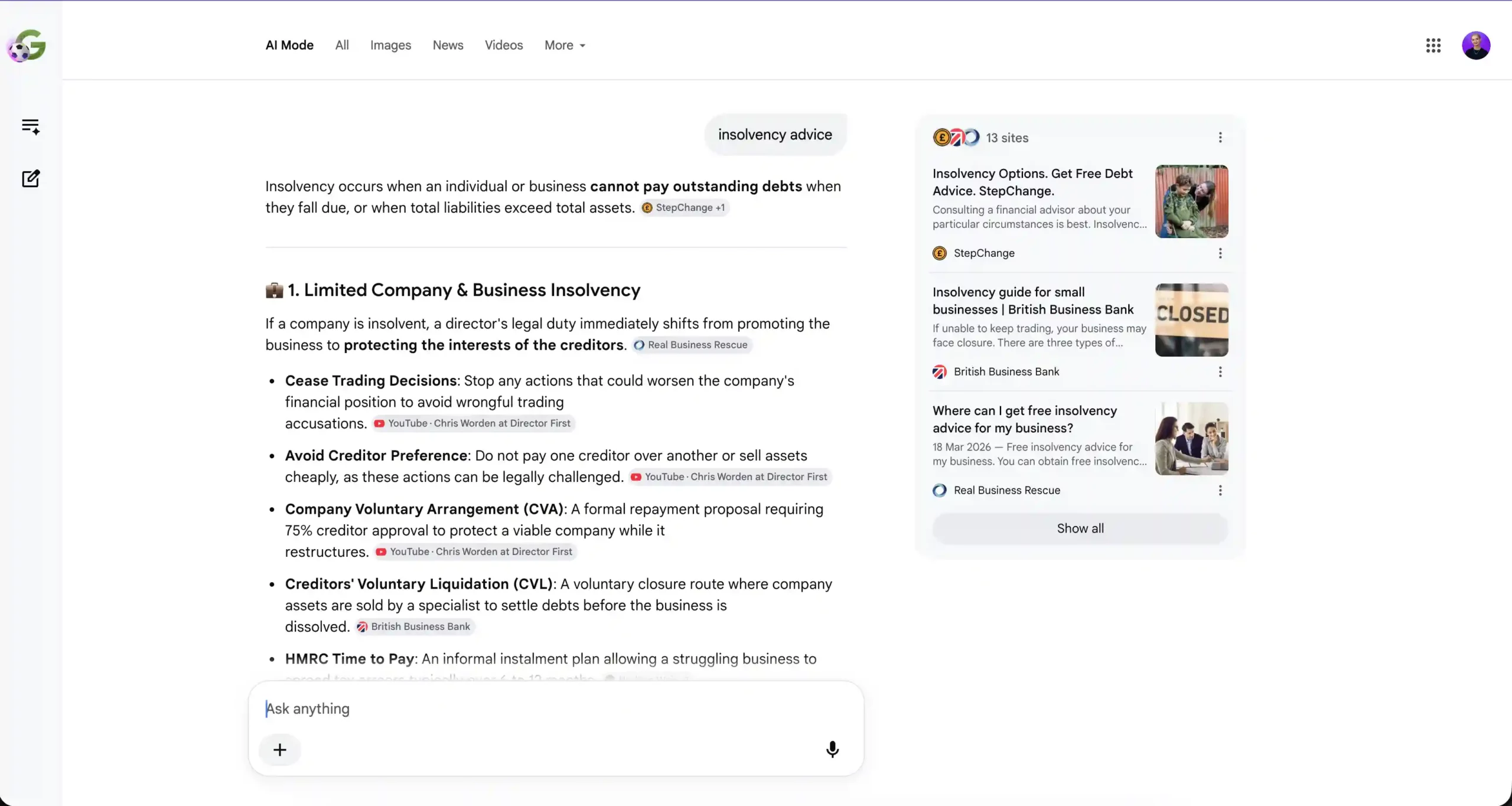
EG: A legal firm specialising in insolvency that publishes ten thin pages targeting “insolvency advice”, “insolvency process”, and similar variants will lose to a competitor with one genuinely comprehensive resource that covers the entity end-to-end.
An entity-focused approach has direct consequences for content planning. Now, marketers should:
If your content calendar still starts with a keyword list pulled from a volume tool, it is built for the search behaviour of three years ago.
Google has been explicit that generative engine optimisation sits within search engine optimisation. The fundamentals (crawlability, authority, relevance, and technical health) still determine whether ChatGPT, Perplexity, Gemini, or AI Overviews surface your content.
What has changed is the unit of optimisation.
Search behaviour is longer, more conversational, and more situationally specific, which means optimising against a tight keyword cluster is no longer enough to be retrieved and cited.
“Google’s recent guidance has actually told us that they are one and the same, that GEO is just the latest evolution of SEO.”
— Nik Riccardi, SEO team, Sleeping Giant Media
For marketing leaders, the implication is structural. If you have a GEO agency, an SEO agency, and a content agency all working in parallel, you are paying three times for overlapping work that could be handled by an expert agency with a unified SEO & content strategy. Consolidate the brief, and judge performance against a single search visibility remit.
When it comes to content strategy, the evolution of SEO to include GEO has some significant implications.
The shift from keywords to entities is arguably the most commercially important change. AI systems retrieve and synthesise based on topical authority across a subject, not on whether a page is tightly optimised for a single phrase.
EG: A legal firm specialising in insolvency that publishes ten thin pages targeting “insolvency advice”, “insolvency process”, and similar variants will lose to a competitor with one genuinely comprehensive resource that covers the entity end-to-end.
An entity-focused approach has direct consequences for content planning. Now, marketers should:
If your content calendar still starts with a keyword list pulled from a volume tool, it is built for the search behaviour of three years ago.
Loopholes in generative search will close as quickly as they did in traditional SEO, and brands chasing short-term visibility hacks are taking on penalty risk for gains that last weeks.
There is a recurring pattern in search: a loophole appears, agencies sell it as a tactic, the algorithm closes it, and the sites that leaned hardest into it lose visibility for months. The same cycle is already starting in AI search, with prompt injection, llms.txt manipulation and citation farming being marketed as quick wins.
“You might growth hack something, and it might rank for 2 weeks, but if you’re actually writing content the way that it should be done and doing SEO the way that it should be done, then you’ve got that long-term security and safety.”
— Nik Riccardi, SEO team, Sleeping Giant Media
Google already issues manual and algorithmic penalties in traditional search, and recovery is slow, expensive, and sometimes incomplete. There is no reason to assume generative systems will be more forgiving, particularly as Google folds AI features directly into its core ranking infrastructure. If a tactic depends on the system not noticing, it is not a strategy.
The decision for marketing leaders is straightforward: if a supplier is pitching a “GEO hack”, that is a signal to end the conversation, not extend the contract.
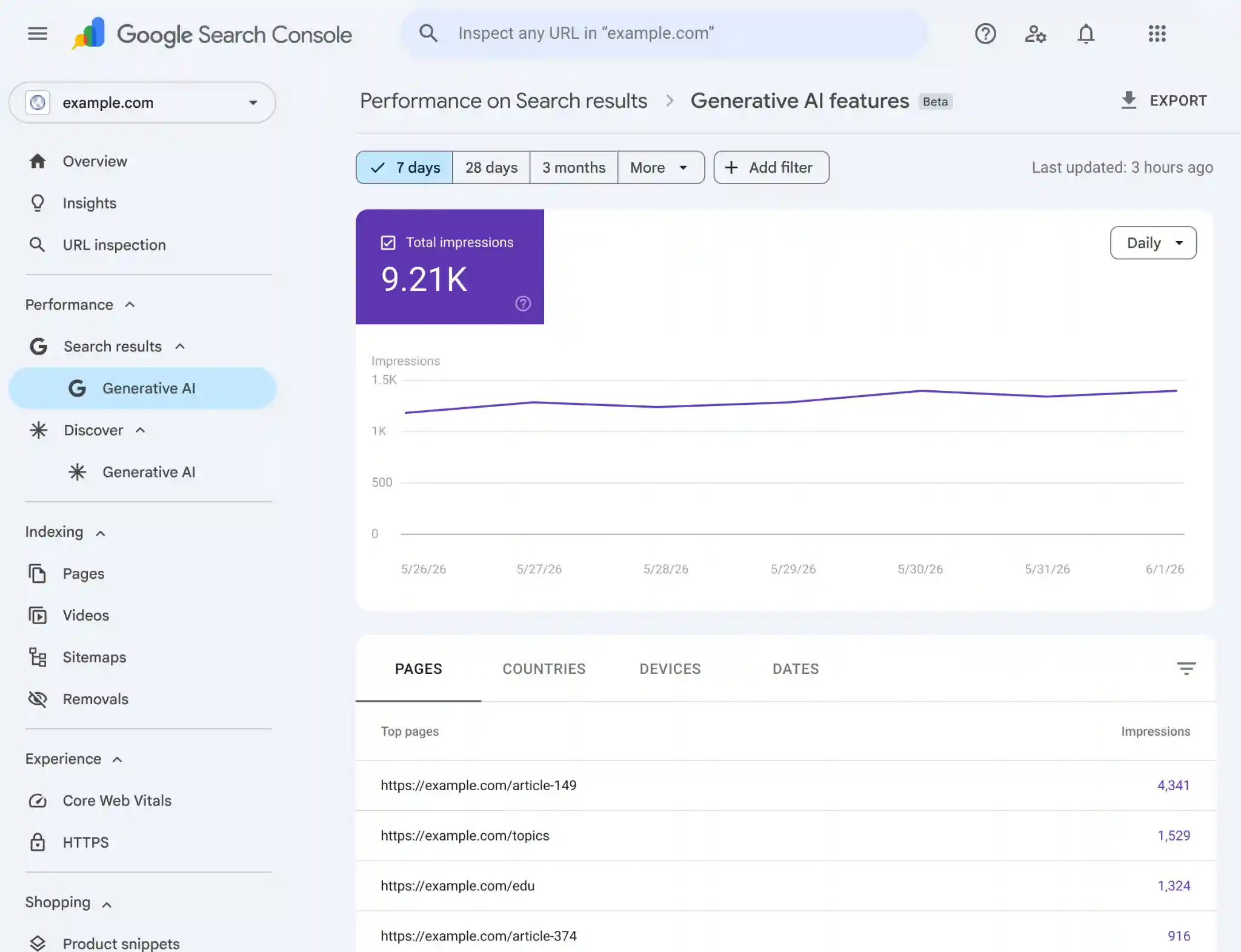
Google has now positioned Search Console as the only authoritative source for AI search visibility data, which makes long-term commitments to third-party AI tracking tools a poor use of budget.
A wave of third-party platforms has emerged to fill the measurement gap created by AI Overviews and zero-click search. They are useful directionally, but their data is modelled, not observed.
Google has now started rolling out generative AI performance reporting inside Search Console, showing impressions across AI Overviews and AI Mode. The current report is limited, but the trajectory is clear, and the third-party market will compress as Google’s reporting matures.
Here’s some practical guidance to help you decide on what measurement tools to test or shelve:
| Decision | Recommendation |
| Third-party AI visibility tools | Monthly rolling contracts only. Avoid annual commitments. |
| Source of truth for reporting | Search Console, validated against on-platform behaviour. |
| Third-party data | Use for direction and competitive context, not for KPI setting. |
Learn more about measuring AI visibility here: How to measure performance in zero-click search

The brands that will win the next phase of search are the ones treating GEO as an extension of mature SEO practice: deep entity coverage, durable authority, clean measurement against Google’s own data, and a refusal to chase tactics that depend on systems failing to catch up.
If you want a sharper view of where your content sits against this shift, or help consolidating fragmented SEO, GEO, and content workstreams, get in touch with the team at Sleeping Giant Media.
For more expert guidance on the latest changes in search, keep up with our calendar of marketing leadership events, library of informative videos, and blog for complex topics unpacked.
Google has now positioned Search Console as the only authoritative source for AI search visibility data, which makes long-term commitments to third-party AI tracking tools a poor use of budget.
A wave of third-party platforms has emerged to fill the measurement gap created by AI Overviews and zero-click search. They are useful directionally, but their data is modelled, not observed.
Google has now started rolling out generative AI performance reporting inside Search Console, showing impressions across AI Overviews and AI Mode. The current report is limited, but the trajectory is clear, and the third-party market will compress as Google’s reporting matures.
Here’s some practical guidance to help you decide on what measurement tools to test or shelve:
| Decision | Recommendation |
| Third-party AI visibility tools | Monthly rolling contracts only. Avoid annual commitments. |
| Source of truth for reporting | Search Console, validated against on-platform behaviour. |
| Third-party data | Use for direction and competitive context, not for KPI setting. |
Learn more about measuring AI visibility here: How to measure performance in zero-click search
The brands that will win the next phase of search are the ones treating GEO as an extension of mature SEO practice: deep entity coverage, durable authority, clean measurement against Google’s own data, and a refusal to chase tactics that depend on systems failing to catch up.
If you want a sharper view of where your content sits against this shift, or help consolidating fragmented SEO, GEO, and content workstreams, get in touch with the team at Sleeping Giant Media.
For more expert guidance on the latest changes in search, keep up with our calendar of marketing leadership events, library of informative videos, and blog for complex topics unpacked.
Ready for a digital marketing partner that delivers clear scoping, full transparency, and proven results? Fill out the form below to connect directly with the Sleeping Giant Media team and discover how we can help your business thrive.
AI-first search is changing how brands need to think about marketing budgets. Here’s how to rethink your investment across SEO, GEO, content, paid media and Digital PR.
ChatGPT Work and Claude Design 2.0 are changing how marketing teams create, automate and manage work. But as AI takes on more of the workflow, what happens to human oversight, brand ownership and compliance?
Reddit’s share of ChatGPT citations dropped by 86.4% in just four days. So, what happened? We look at what the change could mean for AI visibility, why relying too heavily on a single citation source creates risk, and what marketers should be doing to build a more resilient strategy.