AI-first search is changing how brands need to think about marketing budgets. Here’s how to rethink your investment across SEO, GEO, content, paid media and Digital PR.
How To Build A Marketing Budget For An AI-First Search Landscape
read more
Ask ChatGPT which product to buy, or type a question into Google and watch the AI Overview answer, likely before you’ve even scrolled to the rankings. Look closely at the response, and you might notice what’s been keeping marketers up at night lately: the generated answers name brands. And that might not mean yours.
Being cited as a source in AI summaries is significant for brands now, and has transformed the way Digital PR and SEO agencies think about search.
The ranking you spent budget, time, and effort on still exists, but a growing share of your buyers now get their answer from AI search, and they may never reach the page underneath it.
Back in 2024, Gartner predicted that traditional search volume would fall by around a quarter by 2026 as people move to chatbots and AI assistants. However, we’ve already seen traffic drops of up to 60% for some brands.
In this blog, our search experts cut through the noise on what actually earns a citation.
Getting ‘cited’ means an AI engine pulls your brand or your content straight into the answer it hands a user. For you, this means earning the visibility and the trust at the exact moment of the question, usually without anyone clicking through to your site at all.
Traditional search sent people to a page so they could find the answer. AI search accelerates the query-to-answer process.
When someone asks an AI a question, the engine reads across ‘authoritative’ sources, synthesises one answer, and creates footnotes. For marketers, this means success can’t be measured with a position on a results page alone. Now, it’s being one of the sources an AI model selects to answer a question.
The industry has not fully settled on one single name yet. You might hear Generative Engine Optimisation (GEO), Answer Engine Optimisation (AEO), or other phrases related to large language models (LLMs). But they describe the same goal: getting your content named inside the answer rather than buried in a list beneath it.
5WPR found the overlap between the top organic links and the sources AI engines cite has dropped from roughly 70% to under 20% in two years, which means the ground you’ve gained in search engines doesn’t guarantee a brand a place in an AI answer.
Brands cited in AI may enjoy higher click-through rates on both organic and paid listings, because a name that appears in the answer carries an implied endorsement and trust that a website link a few pages into Google won’t. And that’s not to mention the benefits of brand exposure via AI models. If your competitor is the one being quoted when a buyer asks the deciding question, this means you could be losing leads without ever realising it.
“It feeds the knowledge graph and other large language models used by search engines and enables traditional search placements like feature snippets and semantic QA boxes.”
Billie Morland, SEO Executive, Sleeping Giant Media.


The mechanism underneath is retrieval-augmented generation, or RAG. Rather than answering from memory, the engine goes and fetches relevant content, then writes its answer on top of what it found, typically in a summary format.
For example, a question like “Where are the best tourist spots in London?” is not searched as one phrase. The engine quietly splits it into several and looks for sources that answer each smaller query, which means answers are contextual rather than based on keywords.
An engine cites what it can lift cleanly and trust. A wall of text missing appropriate headers or a structured flow forces LLMs to guess where the answer is. This lowers confidence, and without that, an answer won’t be considered suitable for citation.
Getting ‘cited’ means an AI engine pulls your brand or your content straight into the answer it hands a user. For you, this means earning the visibility and the trust at the exact moment of the question, usually without anyone clicking through to your site at all.
Traditional search sent people to a page so they could find the answer. AI search accelerates the query-to-answer process.
When someone asks an AI a question, the engine reads across ‘authoritative’ sources, synthesises one answer, and creates footnotes. For marketers, this means success can’t be measured with a position on a results page alone. Now, it’s being one of the sources an AI model selects to answer a question.
The industry has not fully settled on one single name yet. You might hear Generative Engine Optimisation (GEO), Answer Engine Optimisation (AEO), or other phrases related to large language models (LLMs). But they describe the same goal: getting your content named inside the answer rather than buried in a list beneath it.
5WPR found the overlap between the top organic links and the sources AI engines cite has dropped from roughly 70% to under 20% in two years, which means the ground you’ve gained in search engines doesn’t guarantee a brand a place in an AI answer.
Brands cited in AI may enjoy higher click-through rates on both organic and paid listings, because a name that appears in the answer carries an implied endorsement and trust that a website link a few pages into Google won’t. And that’s not to mention the benefits of brand exposure via AI models. If your competitor is the one being quoted when a buyer asks the deciding question, this means you could be losing leads without ever realising it.
“It feeds the knowledge graph and other large language models used by search engines and enables traditional search placements like feature snippets and semantic QA boxes.”
Billie Morland, SEO Executive, Sleeping Giant Media.
The mechanism underneath is retrieval-augmented generation, or RAG. Rather than answering from memory, the engine goes and fetches relevant content, then writes its answer on top of what it found, typically in a summary format.
For example, a question like “Where are the best tourist spots in London?” is not searched as one phrase. The engine quietly splits it into several and looks for sources that answer each smaller query, which means answers are contextual rather than based on keywords.
An engine cites what it can lift cleanly and trust. A wall of text missing appropriate headers or a structured flow forces LLMs to guess where the answer is. This lowers confidence, and without that, an answer won’t be considered suitable for citation.
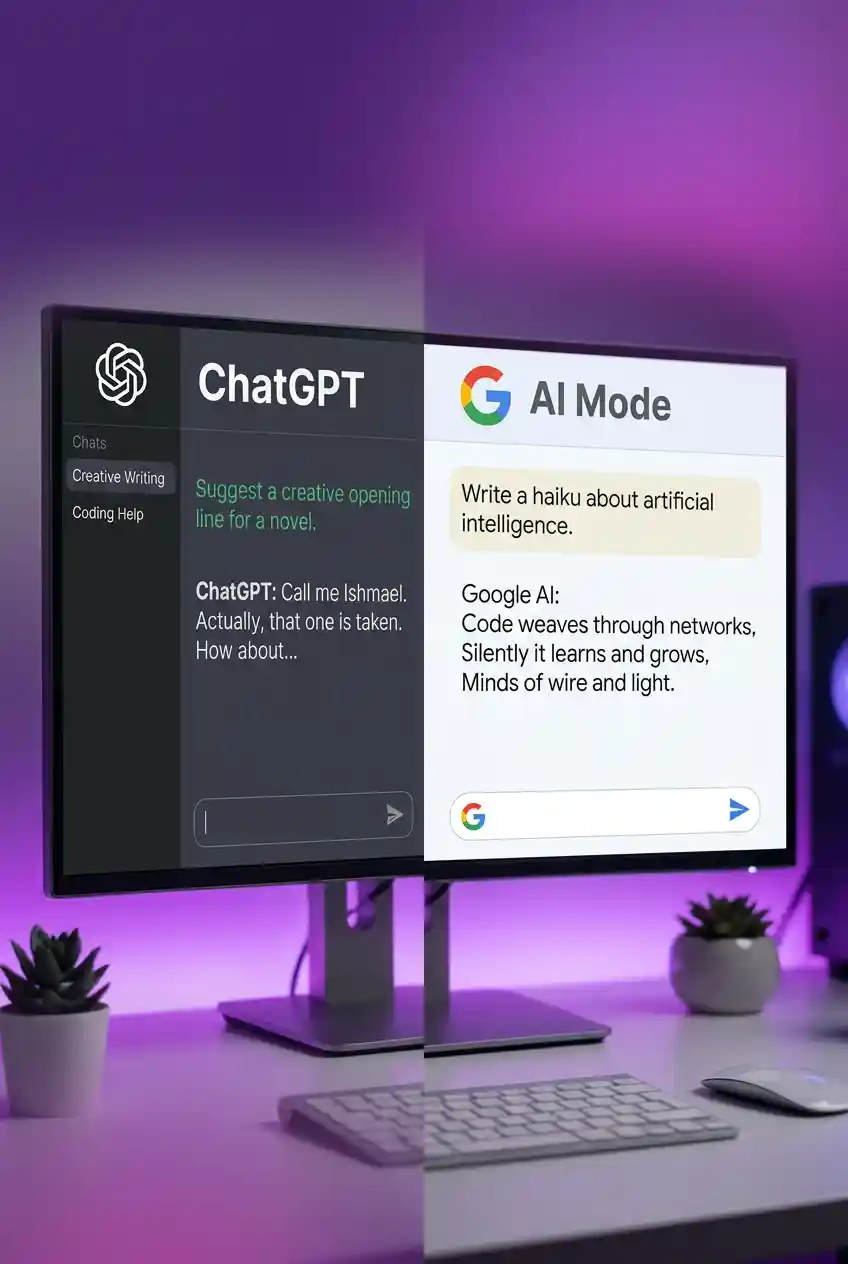
No, AI systems search different indexes and judge authority by different signals. So, a page ChatGPT quotes can be missing entirely from Perplexity, and the overlap between what they cite is far smaller than most marketers assume.
This is the point teams miss most often, because it is tempting to treat “AI search” as a single channel and run one play at it, while expecting the same results each time.
The differences come down to where each engine looks and what it rewards.
This doesn’t mean that appealing to AI needs multiple content strategies. Instead, you need to focus on laying strong foundations, publishing clean copy, and making use of schema, which is easily read not only by humans, but by machines.

First and foremost, content design is (and has always been) for a better user experience: for readability and scannability. However, there are some refinements that can be made for AI retrieval and scannability. In fact, good content optimisation exists in the overlap between both sets of best practice.
To help with maximising citation potential, structure content so an engine can pull a complete answer out of a single passage:
Everything the retrieval process rewards comes back to making your answer easy to find and easy to extract.
Structure gets you readable, but you still need to establish authority and trust in order to appear in the first place and get selected as a credible source. Here’s how you can do that:
“Content that performs well in AI search is well structured, contains valuable insight, adheres to E-E-A-T principles, and satisfies user intent by answering questions. Unsurprisingly, this is also the content that performs well in traditional search. Best practices are best practices for a reason.
Kitty Bushell, Content Manager, Sleeping Giant Media.
No, SEO and GEO share foundations, and you need classic search visibility to compete at all, but GEO adds a layer aimed at extraction and entity trust rather than rankings alone. That said, many of the best practices do overlap.
Start with wherever your buyers actually ask their questions. For most UK B2B audiences that means Google’s AI Overviews and ChatGPT, with Perplexity and Gemini close behind. The good news is that the fundamental work, clean structure, strong entities and structured data, pays off across all of them.
Citations are earned, not bought, though paid formats are starting to appear around AI answers. Here’s our guide to ChatGPT ads for more. For now, the reliable route to being named in the answer is authority and structure, not spend.
Expect weeks or months rather than days. GEO requires consistency, so treat it as an ongoing programme rather than a one-off project.


Getting cited in AI answers is not a dark art, nor is it set in stone (and it is certainly not a reason to tear up your existing search strategy).
Create solid technical foundations, structure your content so an engine can lift clean answers, and build entity authority that makes you worth quoting.
Do that consistently and the citations can follow. If you would like to know how we can help you on your journey, reach out to the experts at Sleeping Giant Media today.
No, SEO and GEO share foundations, and you need classic search visibility to compete at all, but GEO adds a layer aimed at extraction and entity trust rather than rankings alone. That said, many of the best practices do overlap.
Start with wherever your buyers actually ask their questions. For most UK B2B audiences that means Google’s AI Overviews and ChatGPT, with Perplexity and Gemini close behind. The good news is that the fundamental work, clean structure, strong entities and structured data, pays off across all of them.
Citations are earned, not bought, though paid formats are starting to appear around AI answers. Here’s our guide to ChatGPT ads for more. For now, the reliable route to being named in the answer is authority and structure, not spend.
Expect weeks or months rather than days. GEO requires consistency, so treat it as an ongoing programme rather than a one-off project.
Getting cited in AI answers is not a dark art, nor is it set in stone (and it is certainly not a reason to tear up your existing search strategy).
Create solid technical foundations, structure your content so an engine can lift clean answers, and build entity authority that makes you worth quoting.
Do that consistently and the citations can follow. If you would like to know how we can help you on your journey, reach out to the experts at Sleeping Giant Media today.
Ready for a digital marketing partner that delivers clear scoping, full transparency, and proven results? Fill out the form below to connect directly with the Sleeping Giant Media team and discover how we can help your business thrive.
AI-first search is changing how brands need to think about marketing budgets. Here’s how to rethink your investment across SEO, GEO, content, paid media and Digital PR.
ChatGPT Work and Claude Design 2.0 are changing how marketing teams create, automate and manage work. But as AI takes on more of the workflow, what happens to human oversight, brand ownership and compliance?
Reddit’s share of ChatGPT citations dropped by 86.4% in just four days. So, what happened? We look at what the change could mean for AI visibility, why relying too heavily on a single citation source creates risk, and what marketers should be doing to build a more resilient strategy.